Showing posts with label Coin Collection. Show all posts

Saturday, March 17, 2012

Grand Ol' Stamp - CC 400

CC 400
4₵ US Stamp
Era: 1950's
Details: 49-star flag

If you remember awhile back, our 48-star flag was put on display, but add another state to the union and the flag needs to be changed with an added star. Now unfortunately we do not have one of these rarer 49-star flags (after Alaska was admitted to statehood on January 3 of 1959), but we have the next best thing an old US postage stamp commemorating the new state in the North. Oddly Alaska was originally referred to as Seward's Folly after William H. Seward, Secretary of State under Presidents Abraham Lincoln and Andrew Johnson and Governor of New York, bought the Alaska territory in 1867 from the Russians for two cents per acre. Many people mocked him for such a pointless purchase (Why buy a frozen tundra twice the size of Texas?), but in the end was found to be a smart descison.

Seward is from Auburn, New York (very close to the Sholesonian) and thus it makes sense that this stamp was distributed through the Auburn Post Office starting on July 4, 1959 when the new 49-star flag became official. It was worth four cents, the amount it cost to mail a letter as compared to fourty five cents in 2012. 209,170,000 of these commemorative stamps were issued (120 million initially) and were sold in sheets of fifty. While the stamps lasted for awhile, the physical flag itself had a short lifetime. With the admission of Alaska in January, the forty-nine star flag was short lived until eight months later when Hawaii was asscessioned into statehood on August 21, 1959.

The stamp was designed by Stevan Dohanos and issued under Postmaster Arthur E. Summerfield. It was printed on the Giori press which has an interesting story in itself, check out the link to learn more. You can find more information on 49-star flag stamp and the rest of the 1959 stamps issued here. Below is a photo of Army Quartermaster Andrew McNamara and President Eisenhower unveiling the new 49-star U.S. flag.

Photo: US Army Quartermaster Museum

Saturday, October 15, 2011

My Two Cents - CC 276


CC 276
US Coin
Origin: United States
Unit: 2 cents
Year: 1865

A year ago as part of the opening of the Sholesonian we posted a specimen from each of our six collection, today in celebration of our anniversary we are continuing that with a interesting piece of American history in the Numismatics Collection. For about a decade between 1864 and 1873 the United States tried its hand at producing a two cent coin. Made up of mostly copper with a hint of tin and zinc, the coin did not last as long as its three-cent cousin and was discontinued. In today's economy the coin would be worth approximately 28 cents. 

The obverse of the coin features an American shield with the motto "IN GOD WE TRUST" with two arrows and olive branches sporting behind the shield. The reverse on the other hand features the denomination within what appears to be a wheat wreath with "United States of America" heralding above. This was actually the first coin to feature the iconic "IN GOD WE TRUST" on the coin itself. There have been some attempts to revive the two cent coin, but they have easily died out, even with a burst of public enthusiasm when they were first minted in 1864, the excitement died out fairly quickly. 

If you're interested in learning more here's a great article on the history of the two cent piece. 

Tuesday, June 14, 2011

Zloty Dewizowy - CC 024


CC 024
Polish Bill
Origin: Poland
Unit: 200 zloty

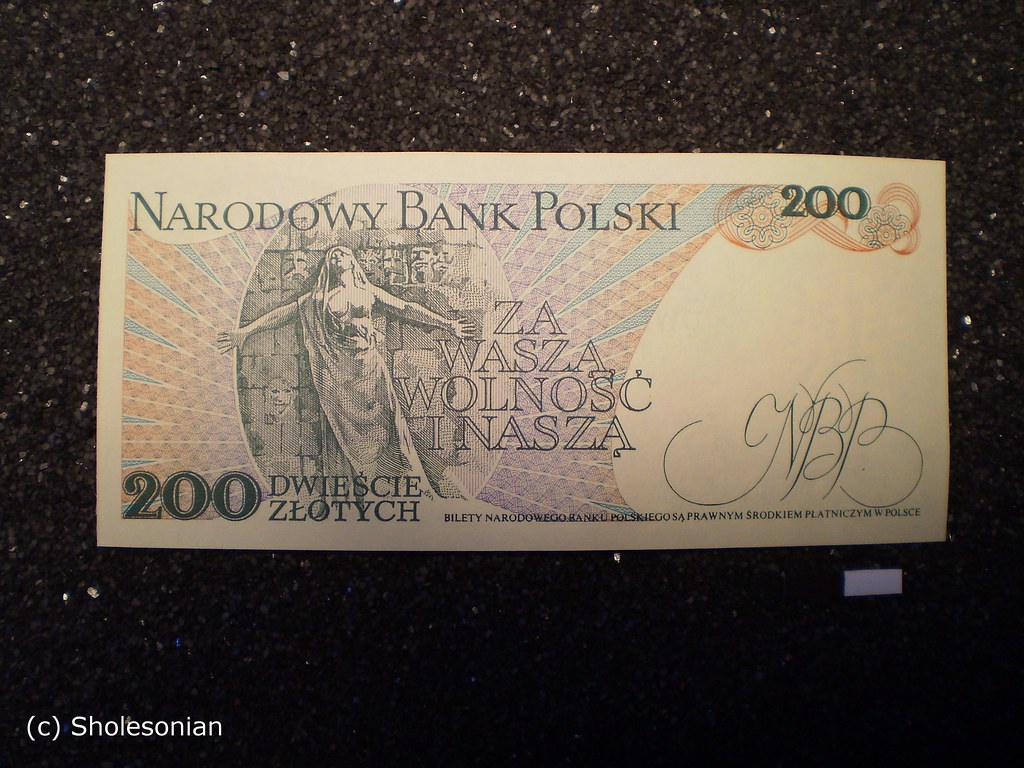
When I started looking up information for this post I thought it was going to be just another currency bill, nothing special. But while searching for who it was on the obverse of this specimen I found out an interesting history behind this bill. I kept searching Google and was seeing that King Sigismund I (the Old) was on the Polish 200 Zloty bill. However it is quite clear that the guy on this bill is NOT Sigismund I. As it turns out this piece was made in 1988 which was part of the Third Zloty series which was from 1950 to 1990 where Poland actually didn't use the zloty. Instead it used a currency unit known as the zloty dewizowy which was a sort of foreign exchange bill. Apparently the zloty was not convertible for exchange and rates differed. But it was finally replaced with the current zloty after the fall of Communist rule. 

I finally was able to dig deep enough to find out who this man is, it is in fact Jaroslaw Dabrowski (1836-1871) who was a Polish general and left-wing nationalist. He fought in the Russian Army and until his death in Paris when right after the Franco-Prussian War the city of Paris declared it's independence from the French government (this only lasted for about 3 months). Because of his radicalism he himself became a Communard (those who lived in the Paris Commune called themselves this) and died at the barricades less than a week before the fall of the independent city. Having tied himself so closely with this radical socialism and revolution his family was deeply shamed, which led to both his sons committing suicide. 

Poland still uses the Fourth Zloty series, not the Euro....yet. The 200 zloty bill continues to have Sigismund I on it, and you can see what the other bills have (they come in 10, 20, 50, 100, and 200 zloty denominations) at this Polish banknotes page. As for the Euro it seems unlikely that Poland will adopt it before 2019 as it would need to join the Eurozone. 60% of the nation oppose switching from the zloty to the euro so it seems unlikely that the country will adopt it anytime soon. There is still a ton of more interesting history of Poland, Jaroslaw Dabrowski, Polish euro and the Polish zloty that I didn't get a chance to go into, so I suggest going out and exploring the topics, like how zloty is based on the Polish word for gold which is why this currency has been used since the Middle Ages and being officially adopted in the 15th century. 


Monday, June 6, 2011

American Philippines - CC 347


CC 347
United States Coin
Origin: The Philippines
Unit: 1 centavo

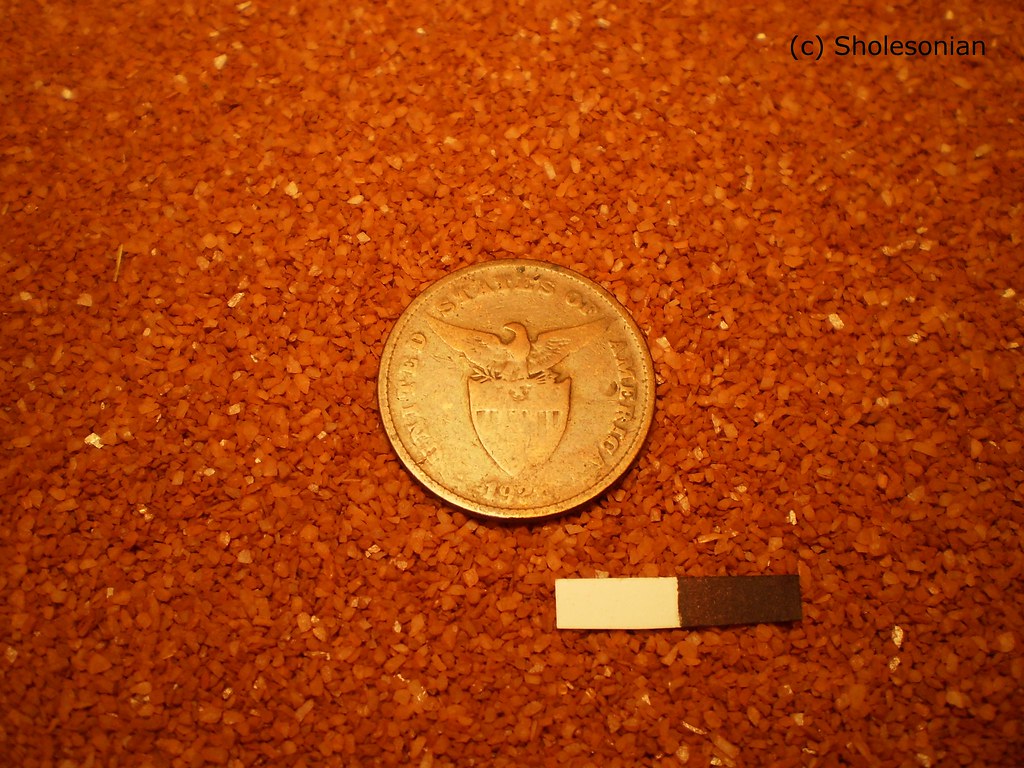
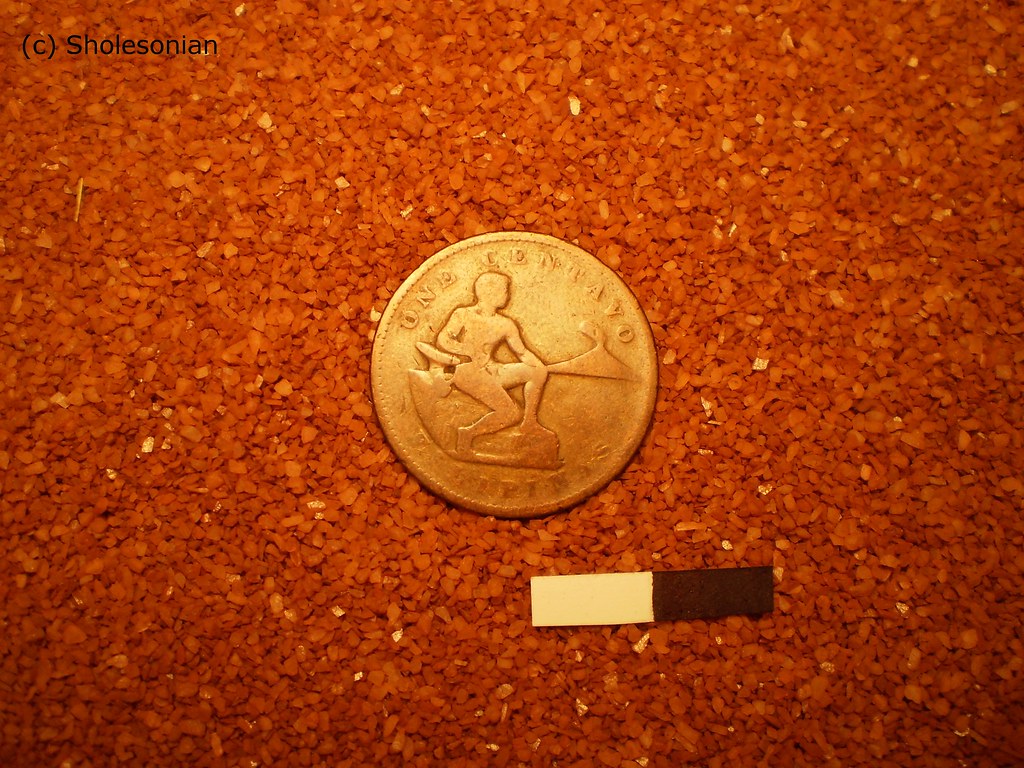
This is an interesting coin coming from the Philippines. What makes it so interesting is that this was made while it was still under U.S. control. The Philippines went under United States control after the Philippine-American War which ended on July 4, 1902 and went under United States control. It wasn't until after World War II on July 4, 1946 that Filipinos gained their independence. This coin shows a crest of the United States with the bald eagle striking a majestic pose. The reverse features a Filipino looking outward towards a lightly billowing volcano in the distance. 

I can't be absolutely positive of the date on this piece. It appears to be 1929 when looked closely under my high power camera but it has been severely worn down through exhaustive use. However it was definitely made between 1903 and 1936 which were the years that this particular coin were minted. It is made completely of bronze and is worth 1 centavo; one cent in the Filipino Peso currency. You can check out a nicer and clearer picture of the coin at this Philippines 1 centavo information page. 


Thursday, March 24, 2011

Penguin Money - CC 319


CC 319
Antarctican Bill
Origin: Canada
Unit: $1 USD

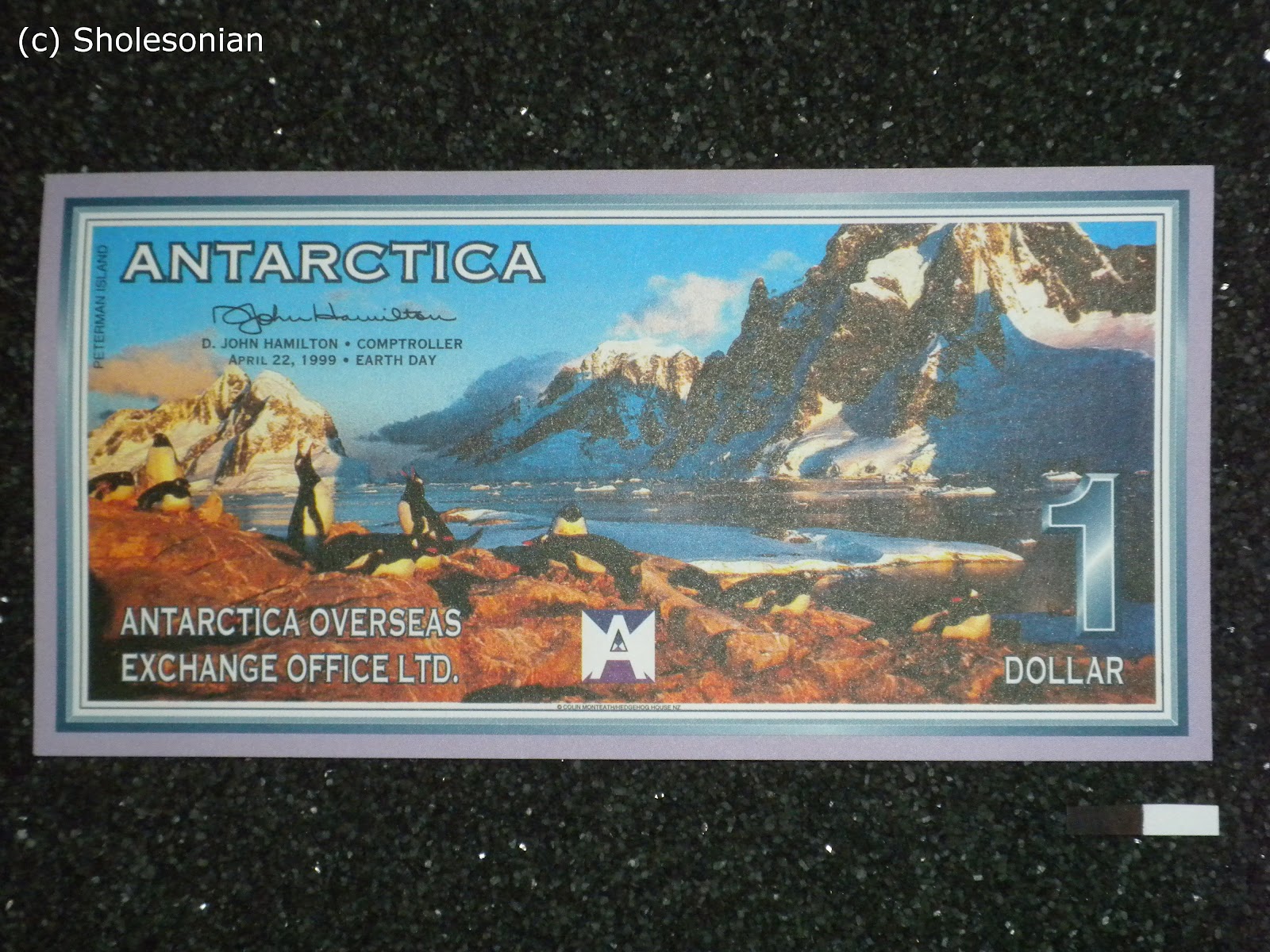
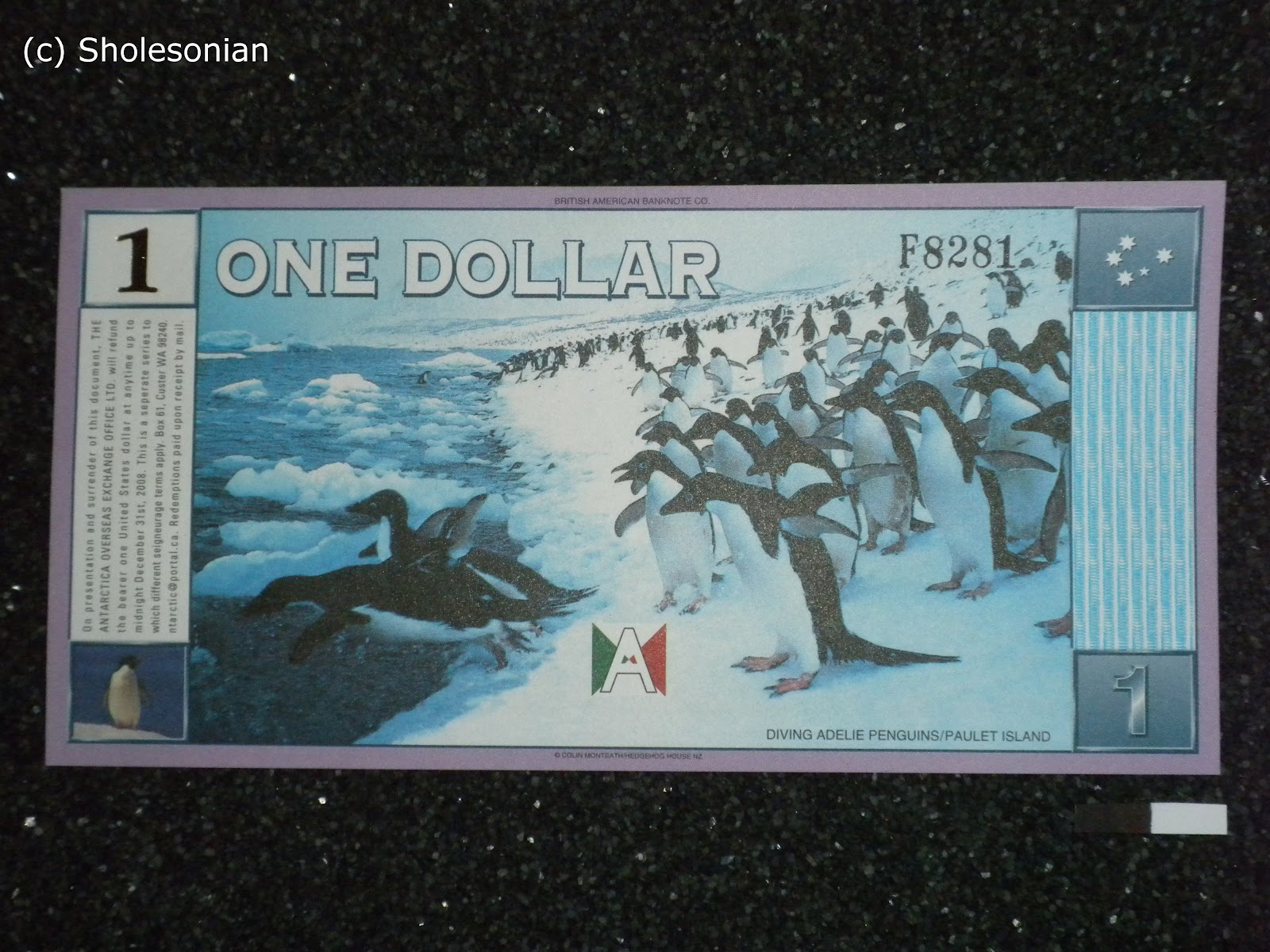
This is one of my favorite pieces in the museum, mostly because of its obscurity and that no one seems to ever think about it. You may notice some oddities in the little description above of the specimen, namely that it's an Antarctican dollar but it's from Canada and worth American, which I shall clear up in a bit. Today's piece from the museum is indeed an Antarctican dollar bill. The obverse has a picture of some mountains, because Antarctica is a continent which means there is rock and ground just like all the others even though there are miles of ice piled on top in some places; this is in comparison to the North Pole which is just ice over the ocean. The reverse features penguins diving into the water, along with the Antarctican flag in the upper right hand portion of the bill. 

I'm sure you all are asking yourself, why is there money in Antarctica, no one lives there? Well first off for half of the year there are scientists down there in a variety of different fields studying climate, astronomy, paleontology, ecology, etc. And there are places down there to spend money, though few and far between such as some research stations have bar facilities. Now how this money works is an independent company called the Antarctica Overseas Exchange Office, LTD. mints these commemorative bills every so often and sells them to collectors, and the vast majority of the profits go towards funding further research in Antarctica. The company is based in Canada, but in trying to keep with it being as close to a real currency as possible they will honor the bill for it's face value, i.e. 1 Antarctican dollar = 1 US dollar (though they do impose time limits on exchanges). However, it is fun to note that some of these bills have turned up in Antarctica so I'm sure a few have been used down there by some playful folks. 

It's a very interesting piece to be sure, and the company really puts a lot of effort into making their bills look great. The Antarctican series comes in $1, $2, $5, $10, and $20 denominations, and they print out new issues with different pictures every few years. You can order yourself one to help out research at the Antarctica Overseas Exchange Office's website and learn more about life in Antarctica at the British Antarctica Survey's website here. Also, you may want to note that this is the same place that made the Galapagos Islands bill that I posted last year. 

Friday, March 18, 2011

Jamaican National Hero - CC 193


CC 193
Jamaican Coin
Origin: Jamaica
Unit: 25 cents

Just a quick post for today from the large Numismatics Collection. This coin comes from the Caribbean island of Jamaica which gained its independence from the United Kingdom in 1962 but remains a commonwealth realm much like Canada or Australia with the queen as the monarch. The coin itself is from 1996 and is worth 0.25 JMD (Jamaican Dollar), making it the quarter of Jamaica. The reverse features Marcus Garvey as part of a National Heroes series. This particular coin was minted between 1995 and 2003 and is made of copper plated steel. 

The obverse features the Jamaican coat of arms which features the English motto: "Out of Many, One People" which is strikingly similar to the United States's Latin motto: "E Pluribus Unum" which means "One Out of Many." This new English motto replaced a former Latin motto: "Indus Uterque Serviet Uni" which translates roughly to "Both Indies Will Serve Together," probably a reference to being under British rule. This coin was part of donation received from the Balling Family. 


Friday, March 4, 2011

Polynesian Penny - CC 239

CC 239
Polynesian Coin
Origin: French Polynesia
Unit: 1 franc

Ok, the title is actually a misnomer as this is a franc rather than a centime (100 centimes = 1 franc), but I was going for the alliteration. For those that don't know French Polynesia is a collection of islands that form a Constituent Country (a 'country' that is part of a larger entity such as Greenland and Denmark). Over 150 islands that make it up are located in the South Pacific Ocean (East of Australia). The most well known and largest of the islands is Tahiti, which is also the most populated of the islands. The capital of French Polynesia is Papeete, and the largest city has an interesting name: Faaa. 

French Polynesia used normal French francs until 1914 when special bills were made for use on the islands. Then for a few years in the 1940's the island used a CFP franc (Think of it as Colonies of the French Pacific, New Caledonia and New Hebrides also used these bills). Then in 1949 coins that most resemble this one began to appear. CC 239 is a 1 franc coin made in 1965. To learn more about the history of the French Polynesian Franc check here and some general information can be found at this French Polynesian franc page. 

Sunday, February 27, 2011

Krakatau! - CC 010

CC 010
Volcanic Bill
Origin: Indonesia
Unit: 100 Rupiah

So just a quick post for the end of February, there hasn't been a bill posted from the Coin Collection posted in awhile so here is a pretty cool one from Indonesia (Which if you didn't know is comprised of 17,508 islands!). The obverse (shown below) has a picture of a traditional which Indonesian sailing cargo ship while the reverse (shown above) shows the erupting volcano Krakatoa (also spelled Krakatau). This particular bill is worth 100 Rupiah and was minted in 1992; the serial number is DBC077504. Briefly skimming through a few articles online it seems that in 1992 the rupiah was worth 1/5th of what it had been back in the '70's. The rupiah is subdivided into 100 sen.

Just a brief overview of the volcanic island of Krakatoa. This large volcano is most famous, or infamous in this case, for a large eruption back in 1883 that killed about 40,000 people. It is known for being the loudest sound ever heard in recorded history with people hearing the explosion for over 3,000 miles. Over 5 cubic miles of ash and debris was ejected, to help you picture this think of a large square that is a mile wide, mile long, and a mile high and you have 5 of these put together; it was a lot of ejecta material. The island (and surrounding islands) are still volcanically active but nothing as spectacular as the 1883 eruption. What is also interesting is that a year after the explosion scientists were studying the effects that the eruption had on the biology of the island. What they found was the only living thing was a small spider living under a rock, yet after years the island began to come back to life with grasses and eventually the ecology was restored. You can find out more interesting information on Krakatoa here.

Sunday, February 6, 2011

Tughra Coin - CC 232

CC 232
Pakistan Coin
Origin: Pakistan
Unit: 1 Paisa

Haven't posted anything in awhile, so I randomly grabbed a coin from the large box of cataloged ones. So I present you with this Pakistan 1 paisa coin. The currency of Pakistan is based on the rupee where 100 paisas equals 1 rupee. In 1961 the country switched over their rupees to make them decimalized, i.e. a system where 1 paisa is .01 of a rupee rather than a system. This is a 1971 version, made of aluminum, and they minted this particular type for six years from 1967 to 1973.

The obverse, which is the top picture here, features a crescent moon and star over what appears to be some sort of spire like thing with some intricate details. This turns out to be called a Tughra, which is a little piece of calligraphy similar to the pharaonic cartouches of Ancient Egypt. Each ruler would have their own design. The reverse design (see below) shows the denomination between to sprigs of oak. Any other information about this paisa can be found here and if you're interested in learning more about tughras check out this link.

Wednesday, January 5, 2011

Hoyer Euro - CC 318

CC 318
German Euro
Origin: Germany
Unit: 1 Euro
Details: 1st map issue

So after the long post yesterday I'll give you a break and post a shorter one up today - though if you haven't already check out yesterday's post on the Titanic. This particular coin comes from Germany and was minted back in 2002 at Hamburg (you can see the J next to the date indicating that it was minted here). And if you're wondering what the title of this post comes from it's because the Hoyer's were the ones who designed the coin.

The obverse features the normal Euro map and the statement that it's worth 1 Euro (this is a first map coin which were made between 2002 and 2006 whereas the second map coins are made from 2007-present). The reverse features the German eagle - a symbol of German sovereignty. The eagle is surrounded by the 12 stars of Europe and the map features the gathering of the 15 states in the European Union.

That's it for now. You can check out this German Euro page for more specific details including metal content et cetera.

Sunday, December 19, 2010

5 Cents and 6 Pence - CC 317

CC 317
Rhodesian Coin
Origin: Rhodesia (Zimbabwe)
Unit: 6 pence or 5 cents
Details: country no longer exists

I currently don't have the bulk of my coin collection on me, but I still have a few coins and bills lying around in museum storage, so I don't have a wide selection of interesting coins to choose from. However, I did find this rather interesting copper-nickel 1964 coin. What's so interesting is that not only does the country no longer exist but when it did exist it was an unrecognized state. A few Coin Collection posts ago I had a 'Toko' bird coin from Botswana, which lies right next to Zimbabwe on the Southern tip of Africa. From 1965 to 1979 this region was known as Rhodesia, named after the famous Cecil Rhodes, whose namesake is also used for the acclaimed Rhodes Scholarship. Rhodesia was subsequently reverted back to British Colonial rule for a short period of time, then known as Zimbabwe Rhodesia or Southern Rhodesia. However in April of 1980 it was formally recognized as its own country now known as Zimbabwe.

Another odd feature of the coin is that on the obverse there is inscribed 6D and 5C to describe its monetary value. This stands for both 6 Pence and 5 cents respectively. During the time that this coin was made, 1964, Rhodesia was using the Rhodesian Pound-very similar to the British pound. Then in 1970 they finally decimalized and converted to the Rhodesian Dollar. So I'm going to take the fact that they were starting to try and slowly transition to the new currency. When they did eventually switch 1 dollar equaled 2 pounds. Here is some more information on the Rhodesian 6 Pence/5 Cents coin.

Thursday, December 9, 2010

Squirrelly Money - CC 020

CC 020
Belarusian Bill
Origin: Belarus
Unit: 50 Kapeykas
Details: 1992 mint

Apologies for not posting anything up lately, but hopefully tomorrow I'll be posting up something exciting - one of my favorite pieces in the collections. But for today I just picked one of the specimens from the coin collection that I had previously photographed. And this particular bill comes from the Eastern European country of Belarus (it's between Russia, Poland, and Ukraine).

This 50 kapeykas bill was minted in 1992 and features a squirrel on the reverse. The 1992 mint was part of the First Ruble group (a kapeyka is 1/100th of a ruble), which has since been replaced with the Second Ruble group in 2000. I can't really read most of it, so I'm not sure if there is any other pertinent information on it, but it's just a small post to satisfy any thirst for more posts you may have.

Sunday, November 21, 2010

Hornbill Coin - CC 059

CC 059
'Toko Bird' Coin
Origin: Botswana
Unit: 5 thebe
Details: bronze

Well I haven't posted up any coins in awhile so I decided to pick another with a random blind pick, and the winner is this interesting Botswana coin. For those that don't know, Botswana is a fairly large country in Africa situated above South Africa; and I have just learned that the currency there is one of the strongest in Africa. This particular coin is from 1991, struck in bronze, and is worth 5 thebe. The currency of Botswana is the pula and is broken into 100 thebe (similar to the American system). On a side note, the word pula means rain alluding to the fact that Botswana gets so little rain that it is prized when it comes. Thebe, on the other hand, means shield.

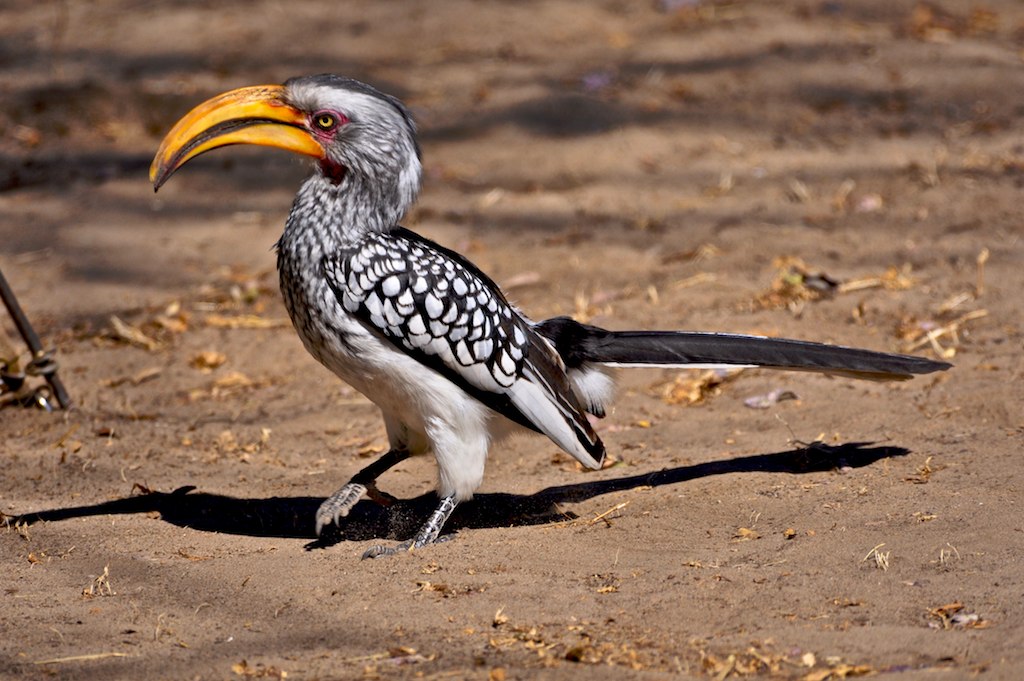
What is particularly interesting about this coin is the bird that they have on the reverse - a Southern Yellow-Billed Hornbill, which the actual bird reminds me a lot of the bird from The Lion King. These birds are a common sight in Botswana so it makes sense that they might have some pride in them. I also found this very cool website that's a Coin Zoo, where the author has lots of coins with animals on them (I have lots more to come as well). And it's interesting to note that on that site the author mentions how the bird is often referred to as the 'Toko' bird as a mis-attribution to its genus Tockus by other coin collectors, as when I received the coin it had 'Toko bird' written on the original holder. The coin's obverse features an interesting seal, with the word 'PULA' written on the banner.

Tuesday, November 9, 2010

Bhutanese - CC 077

CC 077
Bhutan Coin
Origin: Bhutan
Unit: 10 chetrum
Details: bronze

So over the weekend I finally got around to start cataloging the large amount of coins I have (i.e. re-labeling them and giving them a Sholesonian No.). I still have only done about half of them, but I decided to choose one at random from the box I have now for today's post. And that random coin is CC 077 from Bhutan! Before I give you some more detail on Bhutanese coins, the basic information about this one is that it's from 1979 and is worth 10 chetrum.

The ngultrum (their equivalent of a dollar) was introduced in Bhutan back in 1974 replacing the rupee. It, like a dollar, is broken into one hundredths called chetrum. What I particularly like about this coin is the cool gastropod shell on front along with the interesting symbol that appears on all the Bhutanese coins. However, this 10 chetrum piece is no longer in circulation, you can check out the in-circulation Bhutanese coins here, making this piece that much more interesting. And if you don't know where Bhutan is located on the map, it's located between India and China. So now you know.


Tuesday, November 2, 2010

Darwinian Dollars - CC 036

CC 036
Honorary Darwin Bill
Origin: Galapagos Islands
Unit: 500 New Sucres
Details: Extremely good quality

First off, I should be getting some new coin holders soon so I'll be able to get started on cataloging all of my coins. And second, today I am posting up that new piece in the coin collection that I was talking about last week. I'm sure you've been able to guess by now that today's bill is from none other than the Galapagos Islands. Now I'm sure that we are all aware that these islands are not their own country but rather a province of sorts. What I didn't realize was that they were part of Ecuador (I thought it was something like Peru, which is right below Ecuador).

So you may be wondering why there are bills specific to the Galapagos and why they don't use Ecuadorian money, which by the way Ecuador uses the monetary unit sucres. But you see, one company decided to print these special bills in order to commemorate the 200th birthday of Charles Darwin. There are a lot of commemorative coins and bills for certain people and events all over the world.

If you didn't know, the Galapagos Islands are where the famed naturalist Charles Darwin spent a good deal of time studying the unique array of isolated animals eventually leading to his work on evolution and natural selection. So this bill, worth 500 new sucres (see what they did there?), was made last year to honor his legacy. The writing is all in Spanish, the official language of Ecuador and the Galapagos Islands, and features a single tortoise on the obverse with two tortoises, probably in some sort of mating ritual, on the reverse. Which of course are representations of probably the most well known species on the islands: the Galapagos Giant Tortoise (Geochelone nigra). And the reverse also has a liking of Darwin himself.

Now you may be wondering if this money is usable, and the answer is that it depends. The company will present you with its exact worth (how much the bill is worth American and how much you payed for it) which is two dollars. But I've heard stories that some people will accept it down there as legal tender, but I'm not positive on that. But it makes an interesting exhibit nonetheless and represents one of the world's most breathtaking places. I definitely want to go there sometime in the future. Oh, and just for museum purposes the serial number is CD17536.

UPDATE: So I was just informed by my friend Kelsey, who has been to Ecuador, that Ecuador has actually been using the US dollar as it's official currency now. And while Americans hardly use the $1 Sacagawea coins, they are quite popular down there. The only official Ecuadorian money they seem to use are centavo coins now. But anyway I encourage anybody who reads any of my stuff and see any errors to please let me know, that way this site will be more informative and I'll learn something new as well.

Monday, October 25, 2010

Mathematical Money - CC 023

CC 023
Boskovic Bill
Origin: Croatia
Unit: 1 Dinar
Details: no longer in circulation

Sorry about not posting anything up yesterday, but I was busy getting work done and will probably miss some more days this week (it's going to be a busy one). So because of that I'm going to make today's post a bit short so I can get back to doing some work. But anywho, I give you my Croatian dinar.

As it turns out, Croatia only used the dinar as currency after the breakup of Yugoslavia in 1991 and forming their own independent nation. This seemed like a temporary monetary unit however to ease from the Yugoslavian dinar and into the Croatian kuna (1 kuna = 1000 dinar) which replaced the dinar in 1994. So this bill only existed for a short period of time. What makes it so special to me, however, is that all the dinar bills (including my 1 dinar bill) have the picture of Rudjer Boskovic on their obverse (the opposite of reverse). He was a polymath (basically a Renaissance Man), dipping into philosophy, theology, diplomacy, and notably physics and astronomy. His main contribution was in developing a theory on the forces of nature and his atomic model, but he had multitude of other ideas and theories. Hence why he was so important to put on all the bills. The reverse has a picture of the Zagreb Cathedral.

So that's why I like this one, it's rare/out of print and has a famous physicist on the cover (along with some fancy mathematical diagrams depicting some of his work). And finally I'm assuming that this is from 1991 (as the date is there) and the serial number is F0788207. Enjoy. Oh and if you didn't get the old title reference (Boskovic=Washington) it's how Boskovic's picture on the Croatian dinar is equivalent to Washington's on the American dollar.

Wednesday, October 20, 2010

Holy Coin - CC 003

CC 003
Pope John XXIII Coin
Origin: Vatican City
Unit: 100 lire
Details: excellent, no longer minted

I've got another coin for you guys today, and this one comes all away from Vatican City. Despite being the smallest country in the world, they do have their own currency. In present times they have switched over to using the Euro, but before they were using the lira (the unit of Italian currency, pre-Euro). This particular piece is a 100 lire piece from 1960 and in excellent condition. I received it as a present from my dad a few years back. Because of the limited minting, due to the country being so small, these coins are highly collectible and make a great addition to the museum.

The coin features a relief of Pope John XXIII, who served as pope from 1958 to 1963, and you can see the 'tails' side in the photo above. The approximation value of the coin, if you were to actually buy something with it is about 5 Euro cents. An interesting side note about the coins of the Vatican is that they apparently have the worlds only ATM that is in Latin, and while they have functional Euro coins, they do not mint any Vatican Euro bills.

If you want to check out other similar era Vatican coins, click here.
Or, if you want to learn more about their Euros, click here.

Friday, October 15, 2010

Pre-Loonie - CC 004

CC 004
$1 Banknote
Origin: Canada
Unit: One Dollar
Details: Unicirculated, no longer in production

So I was going to post up some other random coin for today's exhibit, but decided on presenting you with CC 004 instead of CC 002, which means nothing to you but this one is cooler in my own honest opinion. And I promise you something really cool either tomorrow or Sunday.

Today I present you with a Canadian $1 bill. This one belonged to my dad back when he collected coins and it somehow managed to make it into my collection. It's dated 1954 and is in pristine condition, nearly uncirculated. What is so interesting about this specimen is that the Canadian government stopped minting one dollar bills back in 1989, two years after they successfully introduced the $1 coin, known as a loonie (due to the picture of the loon on the front). So I think it's pretty cool that I have one of these now obsolete banknotes in my collection, and in great condition to boot.

I'd take a picture of the reverse for you guys but it doesn't seem like it will come out so great (it will seem more transparent). The reverse, however, features what looks like to be a field with a road going down it and telephone poles as it expands outward into the horizon. Pretty cool actually.

On a side note, it turns out that Canada actually had some $4 banknotes printed back in the late 1800's and some $1000 bills until 2000. It would be pretty awesome to have the four dollar bill in my collection but it looks like it's pretty rare from what I can tell through a couple of quick Google searches. Still, I can dream.

Wednesday, October 13, 2010

V is for Victory - CC 001


CC 001
Victory Nickel
Origin: Canada
Unit: Five Cents
Details: About Uncirculated

My first post from the Coin Collection is a 1945 Candadian 'V' nickel (5 cents). I honestly can't remember when and where I acquired this specimen but it was probably at a coin show, collectible shop, or I received it as a gift. The coin was described as 'About Uncirculated.'

It seems that these coins were minted from 1943 to 1945 in order to increase interest in the war effort, for World War II. What I just found out is that instead of the ridges that are engraved on normal coins, like the US quarter, these coins had "We Win When We Work Willingly" written along the rim....but in Morse Code. Makes this an interesting addition to the collection for sure, especially when you also consider the double entendre of the V standing for both Victory and the Roman numeral V (5) to signify the coin's value as well. Oh, and if you're wondering who designed the coin it was Thomas Shingles.