Saturday, June 25, 2011

Spider Ant - NH 221

NH 221
Jumping Spider
Sarinda hentzi
Category: Arachnids
Family: Salticidae

Unfortunately I had a wedding to attend to last week so there was no Spider Saturday, but we are back up today with this very cool, albeit small, addition to the arachnid collection. This particular spider was found crawling on a door in the basement of the PRI in Ithaca, New York back on June 2, 2011. At first I thought it was just another ant, but with good cause. This particular jumping spider is known as an ant-mimicing spider because not only do they look like ants but they behave in ways to get predators to back off thinking they are an ant.

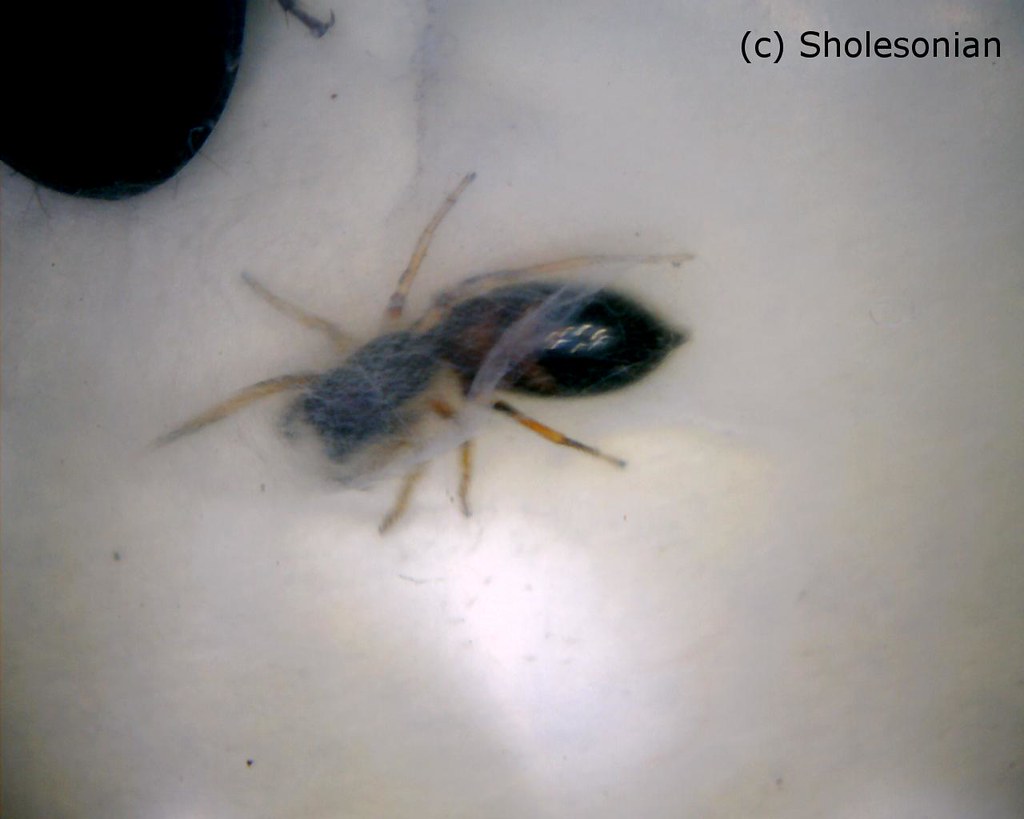
You can see the two front legs in the picture (at the bottom); it will wave these front legs up and down to mimic an ant's antennae. This tactic is used to keep predators away, as many such as wasps will avoid ants due to their aggressiveness and unpredictability. This particular specimen is a female and was collected along with a ground stag beetle, and these jumping spiders will create a small web enclosure to use for protection (from this menacing beetle also in the bag) and she would also use this web for mating, resting, molting, among other things. Below you will find an image of the spider crawling into her newly made web of protection.
Thursday, June 23, 2011

Mercury and Leeches - HS 033


HS 033
Pill Box?
Era: Late 19th Century
Details: Rochester, NY

Wow, this one took awhile to research. While you can't see the whole thing in too much detail, this is a small what I believe to be a pill box made out of a light cardboard-like material. The box has some red covering over it which has severely deteriorated over time but the label on the lid (pictured) is still in great condition. What you can read on the top is "Lane & Paine; Apothecaries; 18 Buffalo St.; Rochester, N.Y.". I can't make out what the label for the contents of the box is (to me it looks like a decaying wave function), but there is an i in it. You will have to disregard the number '14564' as it was used to describe what was put in it much later. 

After digging deep into the internet, I've come up with an approximate timeline for this guy, though I'm not 100% on the sources. I managed to find a site about Landmarks of Monroe County which says that the Paine Drug Store was moved from its location (not mentioned) to a new street in 1878 where it was renamed from Lane & Paine (both of who took over the store in 1852) to C. F. Paine & Co.. This drug store is the oldest in Rochester, NY having been originally founded in 1820. Now finding a Rochester City Hospital review/newsletter of sorts I found an ad for the apothecary from 1869 which is right when it was called Lane & Paine. If you check page 16 of the Rochester City Hospital  review you will see their advertisement which reads "Lane & Paine, Dealers in Drugs, Medicines, Chemicals, Toilet Articles, Perfumery, &c.; 18 Buffalo St., Rochester, N.Y.; Alfred S. Lane, mch, 1866. 1y, Cyrus F. Paine." 

As you can see this date the pill box to between 1852 and 1878 if all of this is correct. Now you may be wondering what an apothecary exactly is. You probably got from the ad that they are some sort of pharmacist-like professionals. This is because apothecaries where the precursors to modern day pharmacies, though they were a bit different. Unlike pharmacists today, many apothecaries would also act like physicians performing operations, looking and diagnosing patients, preparing and selling drugs and medicines, performing procedures that would be considered medieval in today's standards, and selling things like tobacco and homemade remedies. This includes prescribing leeches to drain blood from patients who had 'too much' and hanging drowning victims by their feet from trees and pulling them up and down. Their main tools of the trade were the famous mortar and pestles used for mixing and grinding herbs to make medicines and would even go so far to prescribe mercury to patients. There is much much more information available at this apothecary website which will give an in-depth look into the lives of these practitioners, I encourage you all to have a look. 

Tuesday, June 21, 2011

Fire Wash Fuzz - GEO 029


GEO 029
Pyrolusite
Class: Mineral
Location: New Mexico

Here's a very interesting new addition to the mineral collection at the Sholesonian. This is known as Pyrolusite, and despite it's small size it is different from all the other specimens. Pyrolusite comes in a variety of forms such as botryoidal, columnar and tabular but this is the common black fibrous form. Coming from New Mexico this mineral consists of Manganese and Oxygen (MnO2) making it an oxide mineral.


Here is some interesting geological information taken from this pyrolusite information page:
"A common Mn mineral, although difficult to distinguish from similar Mn minerals, pyrolusite forms under oxidizing conditions and high pH. Mainly a mineral of lacustrine, shallow marine, and bog deposits, it is also found in the oxidized zones of manganiferous ore deposits and as deposits formed by circulating meteoric water. Both colloidal processes and bacterial action are important in its formation."
It can have a wide range of hardness on Moh's Scale ranging from 2 to 6.5. The name pyrolusite comes from  Greek, meaning fire (pyro) and wash (lusite), which is named such in its use to remove tints from glass. 

This mineral also had a hand in the discovery of chlorine gas. When applied with hydrochloric acid the mineral reacts with the acid and produces chlorine gas as a product. Other uses include making a battery (albeit not a very powerful one) and as a dye. 

Wednesday, June 15, 2011

Phacops - FOS 024


FOS 024
Phacops Trilobite
Phacops rana
Location: Lansing, New York
Family: Phacopidae

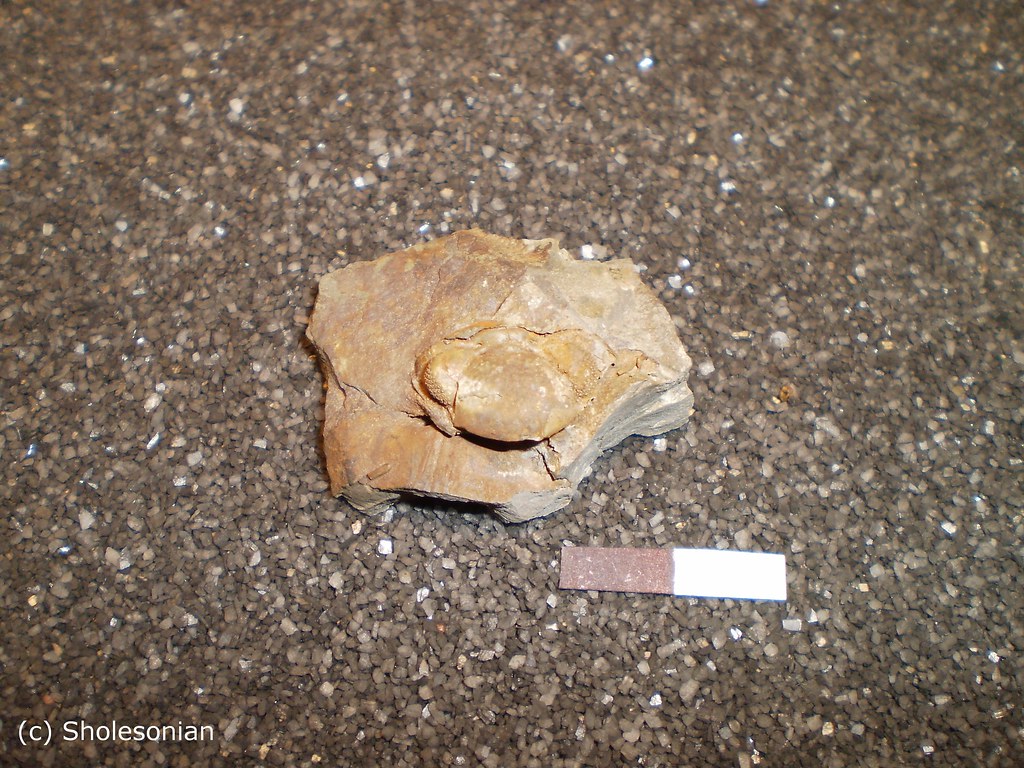
So I just got a trilobites of New York book and have been looking to identify some of the many trilobites in the collection in the coming weeks. While I'm not completely positive that this is indeed Phacops rana I have a good feeling that it is. This species is one of the most recognizable trilobites due to their large eyes (in fact the species name P. rana is a reference to the giant eyes of frogs), as well as one of the most common in New York state. This particular specimen was found in Lansing, New York which is part of the Hamilton Group, Moscow Formation which contains fossils from the Middle Devonian Period which started some 416 million years ago. This geologic period is widely noted for the abundant fish, including the armored placoderms such as the fierce dunkleosteus. 

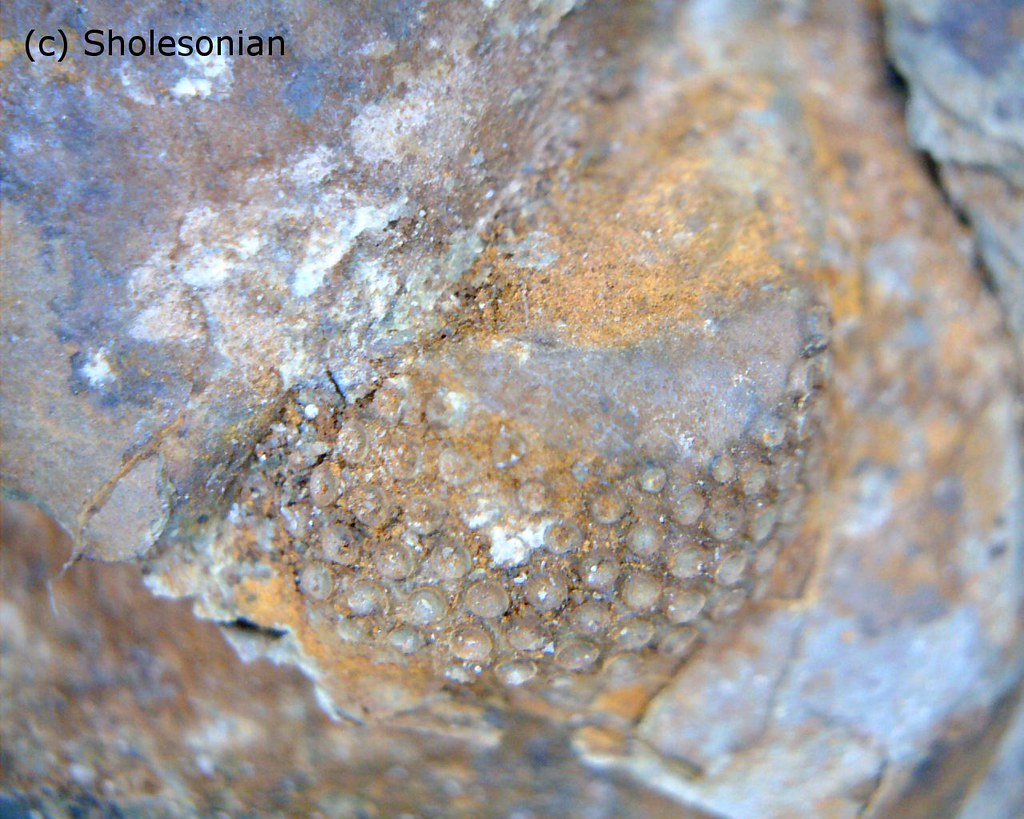
It's a little hard to accurately identify this guy as 1.) I am not an expert on trilobites, and 2.) this is only the cephalon ('head') and doesn't have the rest of the animal (i.e. thorax and pygidium). However as the trilobite book says this is the most common trilobite found in New York. While not always found this way, these creatures could roll up into a ball like 'pill bugs.' You can get a brief introduction to these guys here at this Trilobite information page. And since these guys are most well known for their eyes I took a close up picture for you to enjoy.

UPDATE: This site is actually part of the Hamilton Group, Moscow Formation which includes fossils from the Middle Devonian. 


Tuesday, June 14, 2011

Zloty Dewizowy - CC 024


CC 024
Polish Bill
Origin: Poland
Unit: 200 zloty

When I started looking up information for this post I thought it was going to be just another currency bill, nothing special. But while searching for who it was on the obverse of this specimen I found out an interesting history behind this bill. I kept searching Google and was seeing that King Sigismund I (the Old) was on the Polish 200 Zloty bill. However it is quite clear that the guy on this bill is NOT Sigismund I. As it turns out this piece was made in 1988 which was part of the Third Zloty series which was from 1950 to 1990 where Poland actually didn't use the zloty. Instead it used a currency unit known as the zloty dewizowy which was a sort of foreign exchange bill. Apparently the zloty was not convertible for exchange and rates differed. But it was finally replaced with the current zloty after the fall of Communist rule. 

I finally was able to dig deep enough to find out who this man is, it is in fact Jaroslaw Dabrowski (1836-1871) who was a Polish general and left-wing nationalist. He fought in the Russian Army and until his death in Paris when right after the Franco-Prussian War the city of Paris declared it's independence from the French government (this only lasted for about 3 months). Because of his radicalism he himself became a Communard (those who lived in the Paris Commune called themselves this) and died at the barricades less than a week before the fall of the independent city. Having tied himself so closely with this radical socialism and revolution his family was deeply shamed, which led to both his sons committing suicide. 

Poland still uses the Fourth Zloty series, not the Euro....yet. The 200 zloty bill continues to have Sigismund I on it, and you can see what the other bills have (they come in 10, 20, 50, 100, and 200 zloty denominations) at this Polish banknotes page. As for the Euro it seems unlikely that Poland will adopt it before 2019 as it would need to join the Eurozone. 60% of the nation oppose switching from the zloty to the euro so it seems unlikely that the country will adopt it anytime soon. There is still a ton of more interesting history of Poland, Jaroslaw Dabrowski, Polish euro and the Polish zloty that I didn't get a chance to go into, so I suggest going out and exploring the topics, like how zloty is based on the Polish word for gold which is why this currency has been used since the Middle Ages and being officially adopted in the 15th century. 


Saturday, June 11, 2011

Running Crab - NH 217


NH 217
Running Crab Spider
Philodromus sp.
Category: Arachnids
Family: Philodromidae

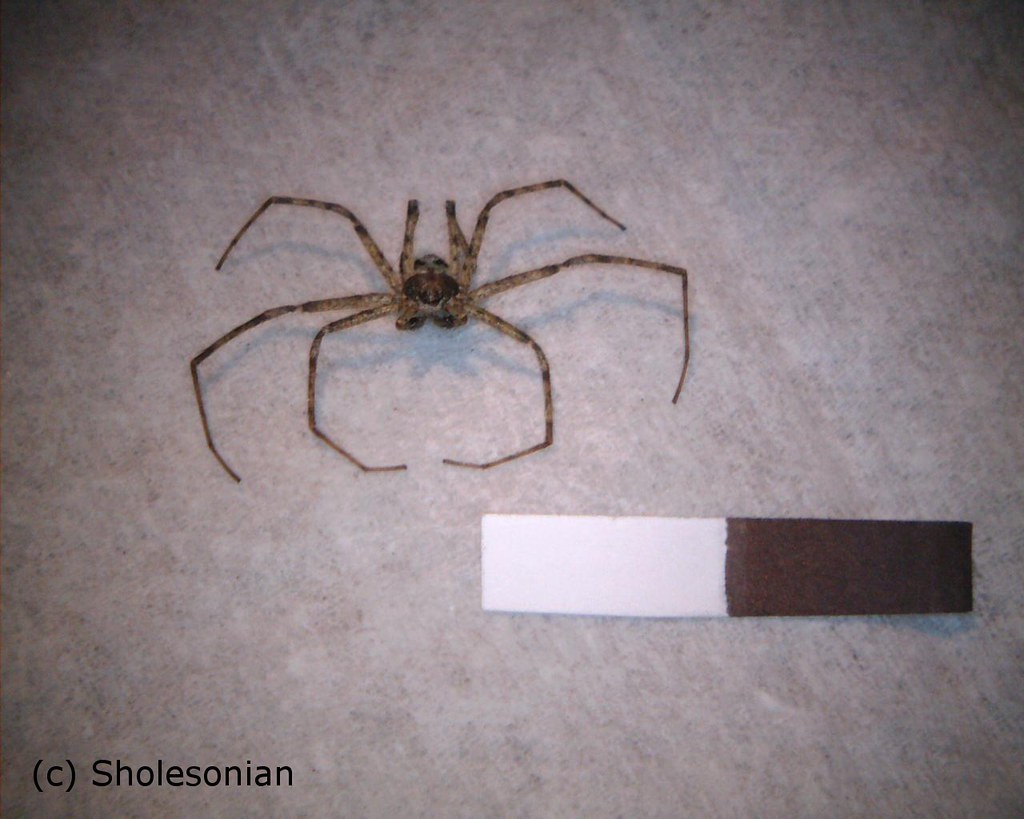
Spider Saturday is back! And to start off a summer of spiders, we have this guy who is a running crab spider of the Philodromus genus. It's a fairly large genus with hundreds of species, so we can't be positive of what species this guy is unless we took a look under the microscope. This guy was found on May 29, 2011 in Cass Park, Ithaca, New York. 

I don't have too much information about these guys at the moment, though I'll try and look up some more information next time I go to the library as there is only so much information I can dig up on the internet. These philodromid crab spiders do not have webs though some will use silk as a dragline. This particular genus is generally flattened and you can see some visual aids in the identification process of Philodromus spiders here. And as you can see from the photo these spiders tend to have few, if any, hairs/spines on their bodies (known as setae). 

Wednesday, June 8, 2011

Boardman No More - PUB 067


PUB 067
Cornell's Boardman Hall Postcard
Media: Letters
Year: 1914
Details: From Ithaca to Trumansburg

And now that the summer season is essentially upon us you all should be seeing many new posts churning out of the Sholesonian. Today we have a postcard that was mailed nearly 100 years ago, 97 years this August to be exact. What makes this so interesting and why it was placed into the collection, aside from its age is that it features Boardman Hall from Cornell University in Ithaca New York. While that may not seem to interesting, the building no longer exists. Built in 1892 it was the home of the Law School until 1932 when the department moved to the new Myron Taylor Hall for law. The History and Government departments then moved in until 1959 when the building was torn down to make room for the new Olin Library (which still stands today). It used to be a prominent building on the Arts Quad, but a few of the stone faces built into the building were preserved in the new library building. 

The postcard itself is stamped August 12th, 1914 at 10:30 AM from the Ithaca Post Office. It has only one one cent postage stamp and is addressed to Miss Carrie S. Allen in Trumansburg, New York, Road #32. The format of the letter is interesting when noting the differences between now and then. The message itself reads:

"Dear folks, 
     Mary got a letter from Ruth stating She is feeling very well + doesnt know whether she'll be here or not. Have you hear from her. Marcia expects to come to Tburg + go to Kingtown (?) to morrow. She is like the paddri's (?) flee. Exams are all right but hard.
                              Blanche"

Another interesting piece for the Sholesonian that only confirms that Cornell University tests have always been hard. And you can read more about Boardman Hall and the history of the Cornell Law Department buildings here or check out the book Cornell: Then and Now by Ronald E. Ostman and Harrty Littell.